The Benefits of Scenario Based Training
Instructors: How would you teach a student to perform a short field landing? What references would you use? What techniques would you employ? How would you know if your student was ready to be evaluated on the maneuver?
Students: How would you prepare to perform short field landings? How would you review and practice the maneuver? What references would you use? How would you know if you prepared for an evaluation of your short field landings?
Legacy training techniques often miss the more important goal. For example, the instructor could list the maneuver requirements from the Airman Certification Standards (ACS), demonstrate an approach to then runway numbers, and ask the student to practice it until he or she can consistently hit the spot. This would be considered Maneuver-based Training (MBT) and it would be easy to assume the goal has been met and the student is practical test ready, at least as far a short-field landings go.
The challenge with MBT is it only gets the student to the rote level of learning. He or she can fly around the pattern and “hit the spot” but do they understand what the purpose is and can they apply it in a real-world situation? Can they correlate the different elements of the maneuver and integrate their experience from one short field landing to another?
Scenario-based training (SBT) is a flight training method that uses real-world scenarios to help pilots improve their decision making and judgment skills. It helps students find the “why” of any maneuver or task. The “why” gets us to application and correlation level learning. Let’s look at a few examples.
The practical test examiner is required to evaluate the applicant’s ability to apply his or her understanding of human factors. He asks, “How would you know if you were too tired to fly today?’ Some applicants would recite the IMSAFE checklist from memory having learned it using a flash card and recalling it flawlessly from memory. That is a demonstration of rote level learning requiring the examiner to go further. “After going through that checklist, how would you know if you were too tired to fly?” The examiner is probing whether the applicant can apply the checklist. If the response included, for example, “If I used the IMSAFE checklist and I determined that I was so tired I was having difficulty doing my weight and balance calculations, I would not go flying.” That would likely fully satisfy the ACS requirements.
Another scenario could cover the applicant’s ability to apply systems, procedures, flows, and checklists. Instead of asking the applicant to describe how a magneto works, the examiner could ask what the pilot is looking for during the ignition system check and why. By describing why the RPM drops, what that demonstrates about the system’s functionality, and how to deal with unexpected results, the applicant can demonstrate his or her rote, understanding, application, and correlation levels of learning thus satisfying several areas of the standards.
Returning to the short field landing scenario, an applicant may be given a simulated obstacle, point to land on, and a target airspeed. In my experience, many students are trained this way. The practical test may be the first time they have been required to evaluate the circumstances, select their own aiming and touchdown points, and decide on the appropriate braking necessary to safely accomplish the maneuver. They may not even know why a short field approach and landing are necessary. Practical tests are much easier when the applicant understands “why” the maneuvers are needed.
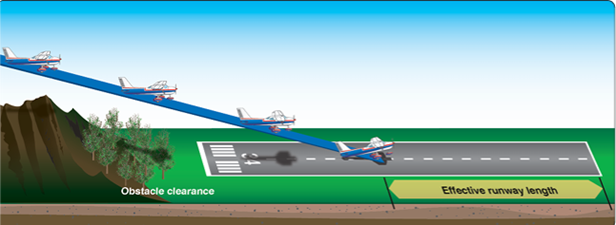
How can the instructor use SBT? For example, photographs and videos of short field landings could be used for discussions during the pre-lesson briefings. Then he or she could point to an actual short field in the practice area and ask the student to imagine a row of trees at one end. The student could be asked to select a touchdown point, describe how to fly a stabilized approach to the selected point, and apply the manufacturer’s recommended procedures for airplane configuration and braking. That field may serve only as a reference for discussion. The flight could then go to an airport to simulate similar conditions for demonstration and practice.
How can the student apply SBT philosophies to their practice and studies? After learning and practicing the flows and checklists for an engine failure during flight, the student could go through each step asking “why” it is important, what it accomplishes, and why the steps are arranged in that order. Now the student’s decision making can be better informed making applying the procedures easier. Further, the student can better correlate those procedures to other lessons learned and more easily recognize when those procedures don’t apply. For example, at a low altitude, perhaps the best tactic would be to lower the nose and land the airplane.
These techniques are not just for rookies. I just recently completed transition training from the Boeing 777 to the 787 which included a pacific crossing flight to Tokyo, Japan. While enroute, the check pilot asked me about the procedures I would use in the event of a cargo fire. Having practiced that in the simulator previously, I described my actions and commented on how busy I was while exercising them. The check pilot’s response lit a big light bulb for me.
She reminded me that the cargo fire detection and extinguishing system is automatic. Although I knew that from my studies, I didn’t apply it to the scenario. Further, she reminded me that the aircraft is certified to fly more than 180 minutes away from a diversion airport. The cargo hold is designed like a thick-walled drink cooler that can contain a fire hazard for an extended period. Finally, the checklist simply covers what has already been accomplished by the automation.
Given my new application and correlation level of knowledge, I realized that my priority as a captain would be to assist the first officer in flying the profile designed to get us under the other oceanic traffic and on our way to the alternate airport. Then I would have plenty of time to perform the checklist duties related to the fire indication. Despite all my experience, I was able to gain a completely new perspective about the scenario and I can apply that perspective to many more situations. Thank you Captain Wendy!
Learning aviation only by flashcards limits the student’s chance of success. Teaching and studying using Scenario Based Training techniques allows pilots to more fully grasp and execute the important concepts. Making the effort to go beyond the rote level will pay off during the practical tests and throughout a pilot’s flying career.
Think safe. Act safe. Stay safe. – Safety Chip
[1] Federal Aviation Administration. (2021). Airplane flying handbook (FAA-8083-3C). U.S. Department of Transportation. Retrieved from ShortFieldApproachLanding_afh_ch9.pdf